
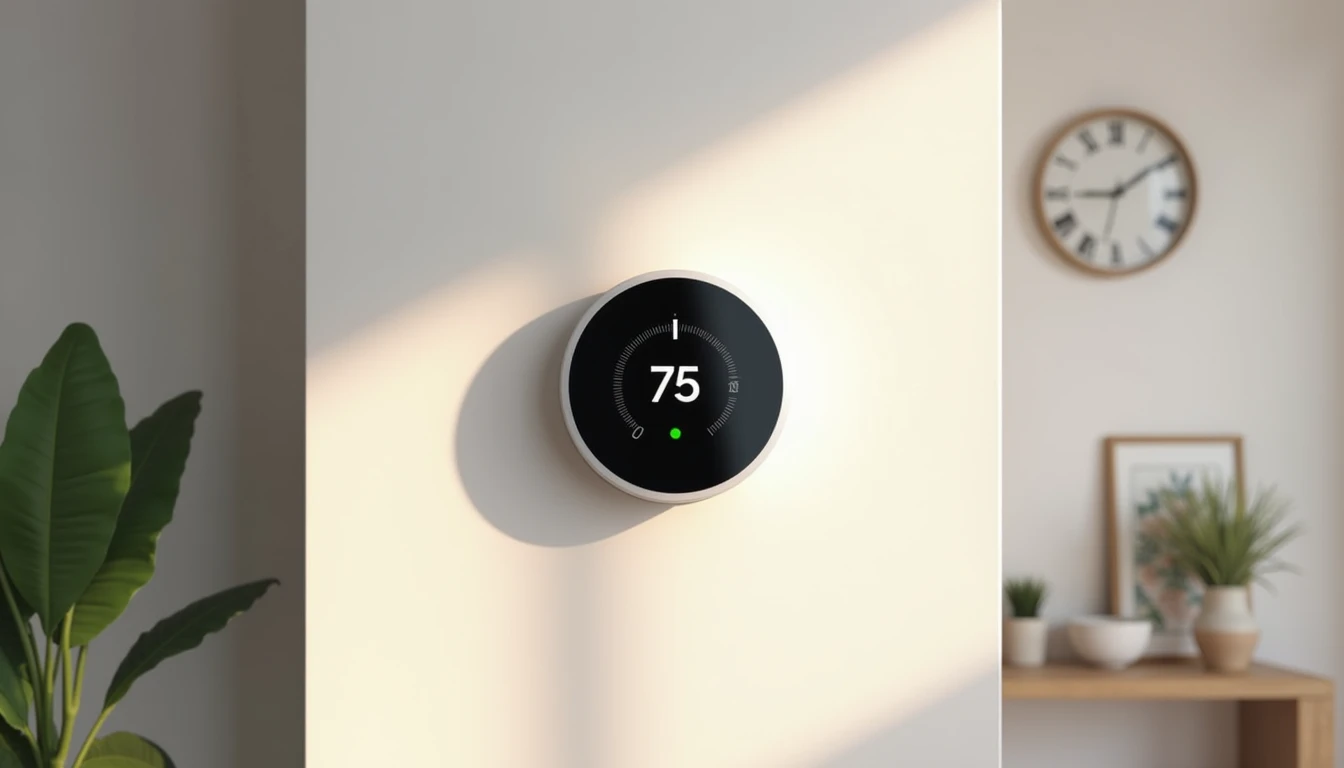
Last winter, my dad called from his small Minnesota town to say he had come home to a 58-degree house. The thermostat screen had gone blank, the furnace had shut off. He was fine; the repair took a service call and a new battery. That experience is one reason I think carefully about smart home devices for older adults — and one reason this guide is honest rather than enthusiastic.
A smart thermostat is a wall thermostat that connects to your home Wi-Fi so you can change the temperature from a phone, see the heating history, and sometimes get reminders about the filter. The most common brands are Nest, Ecobee, and Honeywell. The earlier generation — the programmable thermostat — also changes the temperature on a schedule, but only at the wall.
This guide explains what a smart thermostat does, how it differs from a simpler programmable, three questions to ask before buying, what installation realistically involves, and how an adult child might use remote monitoring on behalf of a parent. The short version: a useful convenience for some homes, an unnecessary addition for others.
What a smart thermostat actually does
A smart thermostat replaces the wall thermostat that controls your furnace and air conditioner. It connects to your home Wi-Fi so you can adjust the temperature from a phone app, see the recent heating history, and set up a weekly schedule from the app.
Feature | What it does |
|---|---|
App control | Adjust the temperature from a phone anywhere |
Weekly schedule | Set lower temps at night, warmer in the morning |
History | See when the furnace actually ran |
Filter reminder | A gentle nudge to change the filter |
Voice control | Works with a smart speaker for hands-free changes |
The wall unit looks like a small round or square screen. It still has up and down arrows. You do not have to use the app to use it — the wall buttons still work. That detail matters for older readers who want the option of never touching the app.
Smart thermostat vs programmable thermostat — the honest difference
A programmable thermostat also lets you set a schedule. The difference is whether the schedule lives on the wall, on a phone, or on a remote server. For readers new to smart home devices for older adults, this table is the place to start.
Feature | Programmable | Smart |
|---|---|---|
Weekly schedule | Yes, at the wall | Yes, in the app |
Phone control | No | Yes |
History | None | Yes, in the app |
Voice control | No | With a smart speaker |
Internet needed | No | Yes, to use app features |
Cost | Lower | Higher |
If all you want is a schedule — "down to 65 at night, up to 70 in the morning" — a programmable thermostat does that well and does not need Wi-Fi. It does not collect data, does not get firmware updates, and does not depend on a company keeping its app online.
A smart thermostat earns its higher price if you want phone control from outside the home, history of when the furnace ran, voice control, or remote monitoring by an adult child on behalf of an aging parent. None are urgent. None are required.
Who genuinely benefits — and who does not
Smart thermostats are a useful convenience for some readers and an unnecessary complication for others. There is no shame in either answer.
You might genuinely benefit if you want to adjust the temperature before you get home, live in a climate with very cold winters or hot summers and want energy history, or want the filter reminder.
You might find it adds complexity if you have an older furnace that is not compatible, have a home Wi-Fi network that drops out often, prefer the simpler wall controls, or already use a programmable thermostat and feel the schedule is enough.
Three questions to ask before buying
Before you spend anything, three small questions to ask.
Question | Why it matters |
|---|---|
Is my furnace compatible? | Most modern furnaces are. The product page has a compatibility tool. |
Is my home Wi-Fi reliable in the room with the thermostat? | If Wi-Fi drops there, the smart features drop too. |
Who in this home will use the phone app? | If nobody will use the app, a programmable one is a better fit. |
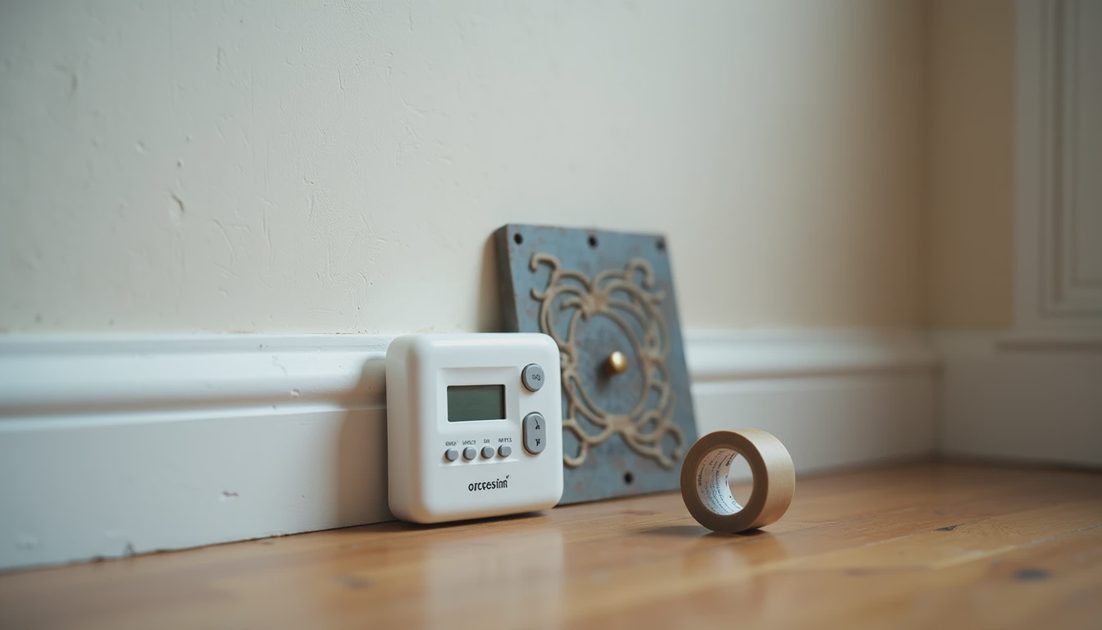
If the answer to the second question is "the Wi-Fi is shaky," move the router closer or buy a small mesh unit. If the answer to the third is "nobody," do not buy a smart thermostat for the smart features. A programmable thermostat with a clear schedule will save you the same money.
What installation realistically involves
Most smart thermostats are sold as DIY projects. The realistic steps look like this.
Turn off the furnace power at the breaker.
Remove the old wall thermostat.
Photograph the wires on the back of the old thermostat.
Label the wires with the small stickers included.
Mount the new base plate using the included screws and level.
Connect each wire to the matching terminal.
Snap the new faceplate on.
Turn the furnace power back on.
Follow the app's on-screen steps to connect to Wi-Fi.
What you should see: the new faceplate lights up, the app finds the device, and the furnace responds to a temperature change in under a minute.
Stop here if the new faceplate stays blank. The most common cause is a loose wire — re-seat each wire and try again. Less common is a system that needs a "C-wire" — a common wire some older furnaces do not have.
If you are not comfortable working with low-voltage wires, stop and call an HVAC technician or an electrician. There is no rush to install a smart thermostat on the same day you buy it.
A note for the adult child considering one for a parent
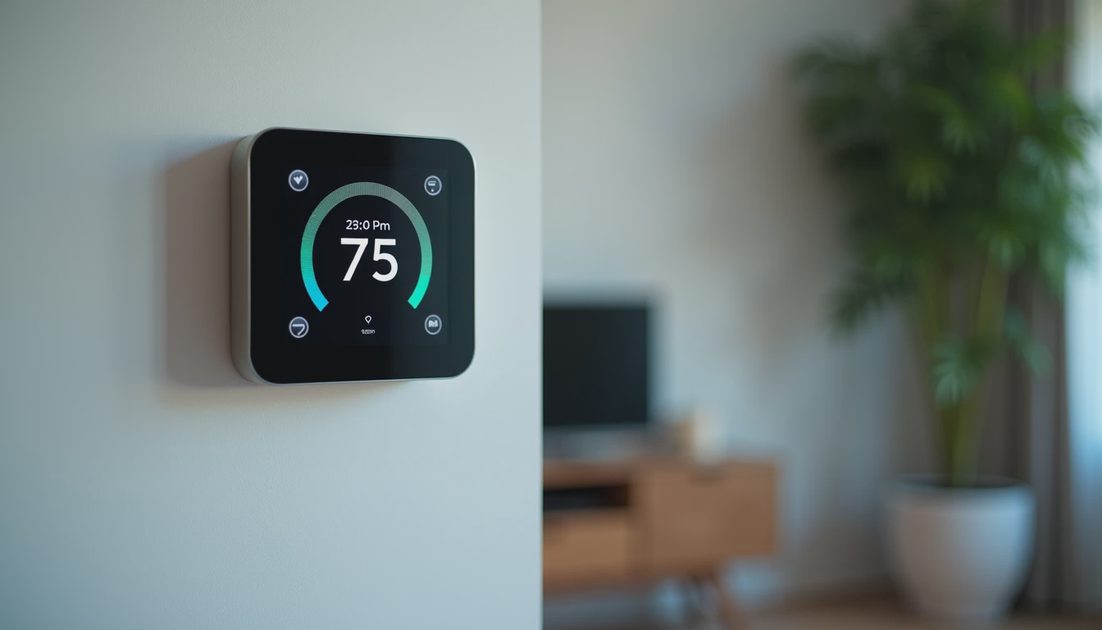
If you are an Evan or a Lila reading on behalf of a parent — smart thermostats are one of the few smart home devices for older adults where remote monitoring is genuinely useful. From the app, you can see whether the temperature has dropped to a number that suggests the furnace stopped. You can adjust it from a distance during a cold snap.
The trade-off is that someone has to set it up. The wall thermostat has to come off, the wires have to be matched, and the app signed in. None are hard, but they benefit from a visit. If you live two hours away — the way I do — plan for a trip or an afternoon with a neighbor or local handyman.
If you would rather not bother, that is a fine answer. A working programmable thermostat and a yearly furnace tune-up will keep a parent's home warm for many winters. Smart is a "nice to have," not a "must have."
A small last note
Smart thermostats are honest tools. They do one job — hold the temperature where you want it, with a few extra conveniences — and they do it well. They are not urgent, not required, and not for everyone. If a guide, a salesperson, or a family member is rushing you, that is a reason to slow down. Take a week. Read the manual. Ask a neighbor with the same model how it has worked for them.
Let's make the next click the easy one.