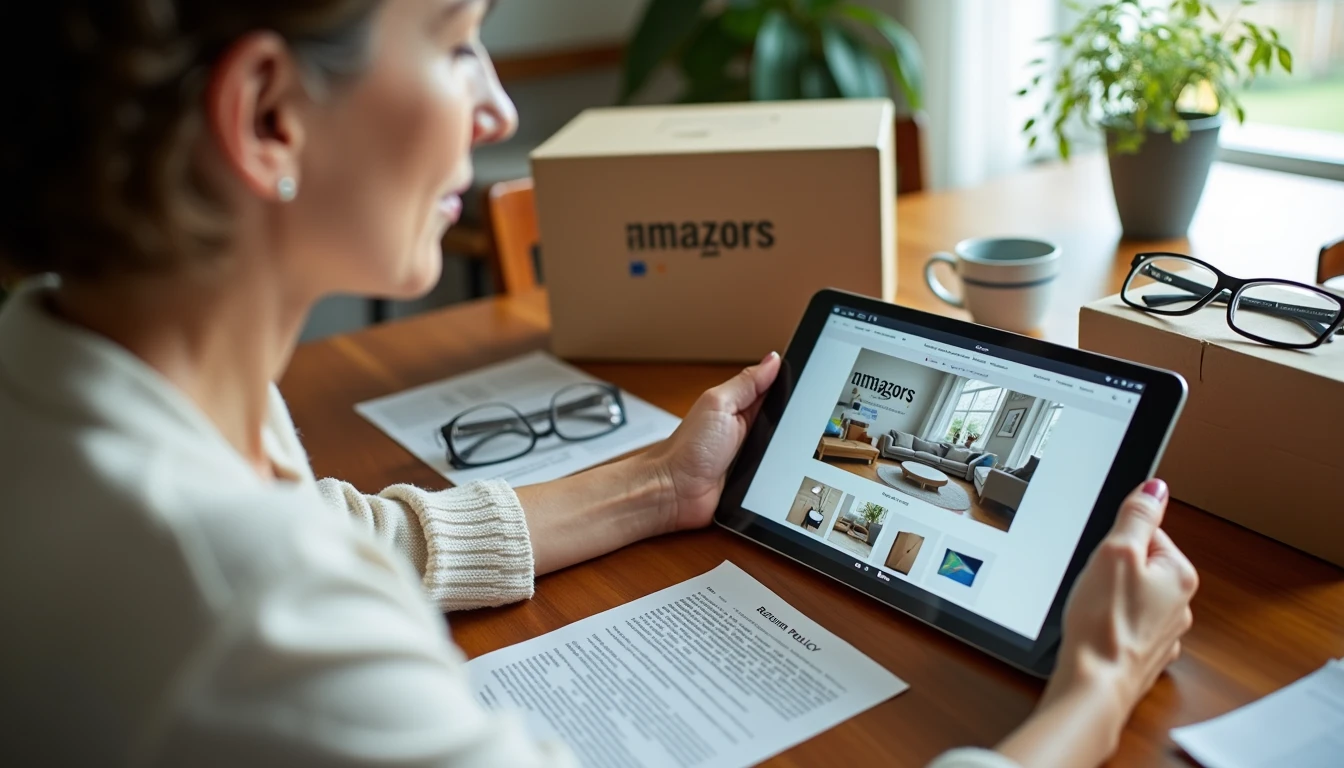
Last spring my mother texted me a photograph of a garden kneeler she wanted to order, followed by the question I hear most often: "Is this a real store?" She lives two hours away, and that single pause before typing a card number is what safe online shopping for seniors actually comes down to. I spent eleven years training patients to use healthcare portals, where the entire job was confirming that the screen in front of them was the official one. The habit transfers directly to shopping: check who you are dealing with, check how you are paying, and check what happens if you want your money back.
Three checks, a couple of minutes each. That is the whole method, and it prevents most of the regret people describe.
The Three Checks That Prevent Almost Every Regret
Every shopping problem I hear about traces back to one of three questions, asked in this order.
Who is selling? An established marketplace, a widely known retailer, or a small shop with a real address and phone number is one thing. A site that appeared in an ad yesterday is another.
How are you paying? A credit card gives you a dispute process. A wire transfer or a gift card gives you nothing.
What does the return policy say? The window, the shipping cost, and the restocking fee decide whether a mistake is annoying or expensive.
Ask in that order, because the first answer often ends the conversation: if nobody can tell you who the seller is, the payment and return details never matter.
Check One: Who Is Actually Selling to You
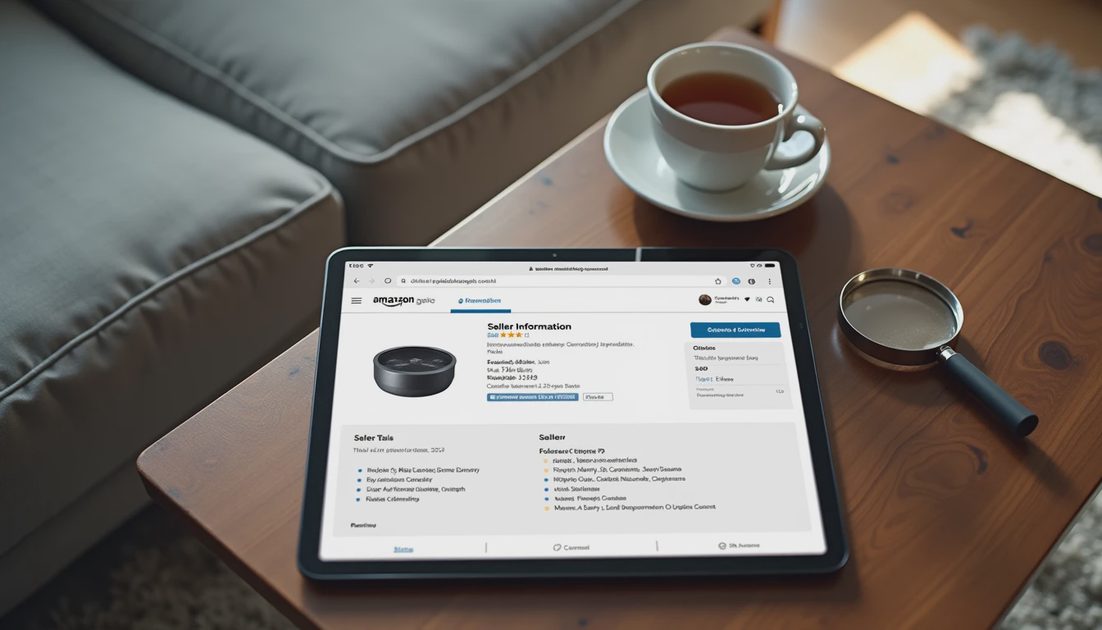
Start with the listing page. On a large marketplace, the page usually names two parties: the platform and the seller. Look for the lines that read "Sold by" and "Ships from," then tap the seller's name. You should see a seller profile with a rating, a number of past ratings, and how long the seller has been active. A seller with thousands of ratings gathered over years is a different risk than one with nine. If you adopt one habit for safe online shopping for seniors, make it this one.
On a stand-alone store, look for an About page with a real street address and a customer service phone number, and a Contact page that offers more than a form. An established retailer can usually tell you where it ships from and who founded it. A thin site whose copy never mentions a place, a person, or a history is a stop sign. Paste the store's name into a search engine and look for coverage outside the store's own pages; if a shop exists only inside its own advertising, treat that as your answer.
Reviews need reading, not counting. A wall of five-star reviews posted in the same week, with similar phrasing, tells you less than a handful of three-star reviews that describe a real order, a real delay, and a real resolution.
Check Two: How You Pay
The payment method is your safety net, and some methods have no net at all. This is the single most useful fact in safe online shopping for seniors, and it is the part where a small change in habit matters most.
How you pay | What protection looks like | What to keep in mind |
|---|---|---|
Credit card | Federal law limits your responsibility for unauthorized charges, and you can dispute a charge for goods that never arrived | Disputes must be filed within a set number of days, so open the statement |
Debit card | You can dispute, but the money has already left your checking account | Resolution takes longer; ask your bank how a provisional credit works |
Established payment service | The service runs its own dispute process and keeps a record of the transaction | Keep the purchase inside the service; never move it into a private message |
Bank transfer or wire | Essentially no reversal | Treat any seller who insists on this as a warning sign |
Gift cards | No reversal and no trace | No legitimate store, agency, or utility asks to be paid in gift cards |
Payment app to an individual | Depends entirely on whether you know the person | Send only to people you can identify and reach |
A few habits make this safer. Pay on the seller's own checkout page rather than through a link that arrives in a message. Decline when a chat agent offers to "help" by taking your card details directly. And if the price dropped only because you agreed to pay outside the platform, that is not a discount, it is a loss of protection.
Check Three: Read the Return Policy Before You Buy
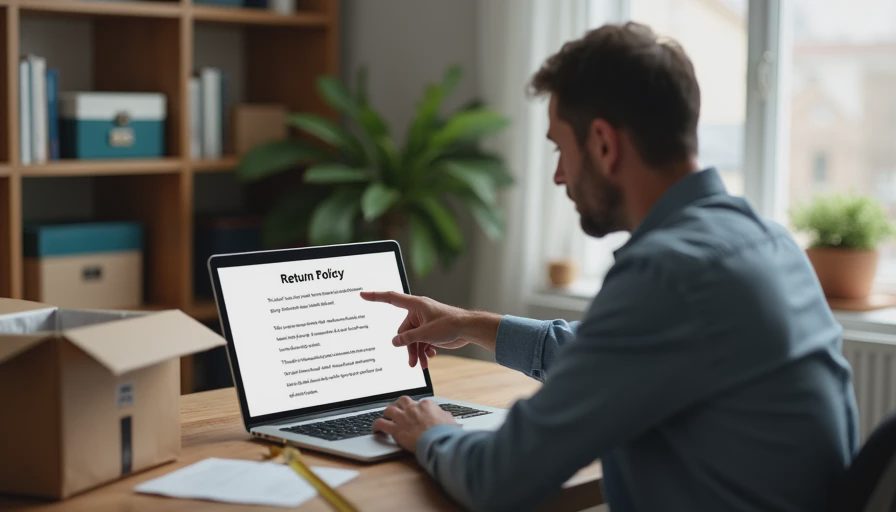
The return policy answers four practical questions, and all four usually live in one place: the "Returns" or "Shipping and Returns" link in the footer of the site. How many days do you have, and does the clock start at delivery or at purchase? Who pays for the return shipping label? Is there a restocking fee on opened items? Is anything final sale, especially clearance and personal care products?
Two details trip people up. First, "free returns" sometimes means free only when you accept store credit or an exchange. Second, on a marketplace, the return may go back to the individual seller rather than the platform, which changes the timeline and the address. Print the policy page or save a screenshot the day you order; pages change, and a saved copy settles arguments.
If you cannot find the return policy at all, that itself is information about the seller.
Signs of a Fake Store
You do not need to spot every trick. Learning how to avoid online scams for seniors is mostly about recognizing patterns like these rather than memorizing details. Two or more of them together is enough reason to close the tab.
Prices far below every other retailer, with no explanation such as a clearance event
A countdown timer that resets when you reload the page
Only a contact form, with no address, no phone number, and no company name
A web address that is a slightly misspelled version of a widely known brand
Payment accepted only by gift card, wire transfer, or a payment app to an individual
On-site reviews that are all five stars and all dated within the same week
Together, they describe a shop with nothing behind it.
If the Order Never Arrives
Work through these in order, and keep every message.
Check the tracking number, then your front porch and mail area. Packages are sometimes marked delivered a day early.
Write to the seller through the platform's message system, not a private text, and ask for a delivery date or refund.
Give a clear deadline, such as five business days, and say what you will do next.
If nothing arrives, open a dispute with your card issuer. Have your order number, the seller's name, and your written attempts ready.
Report the store to the Federal Trade Commission's online fraud reporting site, or to your state attorney general's consumer office.
Stop and call your bank right away if you gave your card details to a site you now believe is fake. Ask them to watch the account or replace the card, and do not wait for a charge to appear. If a purchase is urgent, call the seller before you order and ask a person to confirm the item is in stock. That one call has saved me more than once.
Miles, who is nine, announces "check the seller" whenever a package arrives at our door in Minneapolis, which is either good citizenship or a sign that I talk about work too much. Evan says it is both. Either way, the pause is the skill. Let's make the next click the easy one.